Monday, February 28, 2011

nokia e63 and accessories
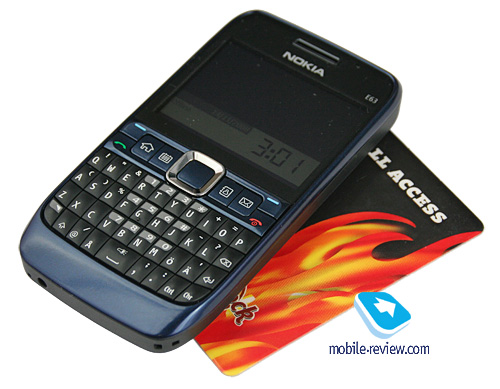 Spotted in a Nokia promotional video and then through a series of spy shots at the tail end of October, the E63 has finally been officially unveiled this week. A relation of the fantastic E71 email-focused business phone, the E63 is slightly pared down in comparison, but don’t dismiss this as phone to gloss over just yet.
Key Features of the Nokia E63:
* It’s a quad-band 3G handset with GPRS, EDGE, Wi-Fi, A2DP Bluetooth and even Infrared as connectivity options.
* Full QWERTY keyboard and E71-beating Navi-Wheel navigational device, just like that found on the new N85.
* A 2 megapixel camera with flash and video.
* MicroSD card slot with a capacity of 8GB maximum, plus 110MB of internal memory.
The E63 should operate in exactly the same way as the E71 as it runs Symbian 9.2 S60 version 3.2 software too, however the new touch sensitive Navi-Wheel which encircles the traditional d-pad should make it even easier to flip between menus and screens.
This is the only feature on the E63 which cannot be found on the E71, which given its inevitably cheaper price tag is one thing more than we would usually expect. The E63 has a plastic casing rather than the E71′s all metal shell and weight drops by just a gram or two to 126. Battery life looks to have been upped to 432 hours standby and 11 hours talktime, improving slightly on the E71.
The E63 looks set to be an interesting addition to the range, perfect for anyone not wanting HSDPA or gadgets such as GPS, but preferring a focused email device which can handle some entertainment if need be, for which Nokia have added a 3.5mm jack plug, their media player and an FM radio.
Given the success of the E71, we see no reason why the E63 should be any different, potentially swaying users who didn’t fancy learning a BlackBerry operating system or the E71′s higher price. Look out for the release date soon.
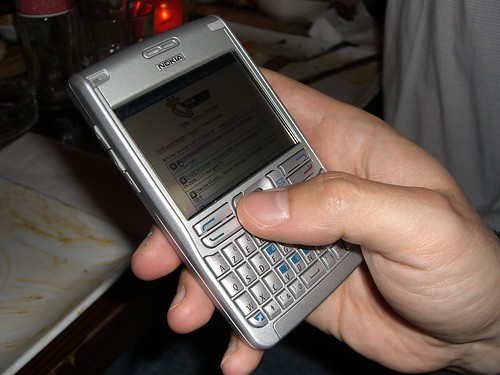 nokia e63
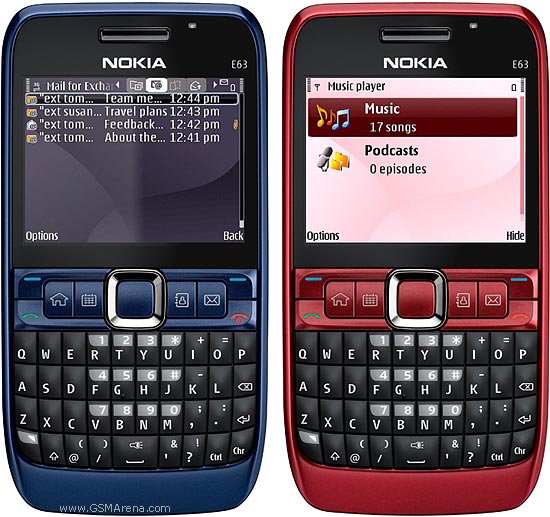 nokia e63
 nokia e63
 nokia e63
 nokia e63
 nokia e63
 nokia e63
 nokia e63
 nokia e63
Sunday, February 27, 2011
Microsoft Bricks Windows 7 Phones
The above headline should never need to be written. A company should never "brick" or render any product that a customer paid for useless. The company should replace the product if this happens accidentally and pay a fine for seriously inconveniencing the customer.
And exactly what mechanism is in the phone that "bricks" it and renders it useless anyway?
Much of the updating problems stem from the halcyon days of AOL, the company that perfected the slipstream update. Back in the 1980s and 90s, when AOL pretty much owned the online segment of the industry, the system would tell you that it needed to make an update when you tried to log off. For the next 15 minutes, AOL would be plugging in all sorts of new code.
I found that this process worked well.
When users were confronted with other systems that wanted to upgrade in later years, reluctance to approve the process set in, especially when it came to Microsoft Windows and its constant need to upgrade on what became "patch Tuesday." This was the result of various upgrades failing for various reasons. It was a little more complicated than fixing AOL.
Apple has done a reasonable job of updating Mac software on the fly. It held an impressive record of quality upgrades with minimal failures. More impressive, at least to me, is that Apple managed to incorporate performance upgrades, so the machine often improved in performance after an upgrade. Windows machines, on the other hand, seemed to continually degrade with each update, running slower and slower over time.
The knowledgeable user generally does not like the auto-upgrade idea. It just seems risky under most circumstances. This is proven every so often when an upgrade fails and has to be fixed in a panic by the company.
The most recent upgrade with the Win Phone 7 is a perfect example. We hear that the process failed on 1 out of 10 phones. This is probably a low estimate, but a 10 percent failure rate is still ridiculous, especially if some phones then became unusable.
In the first place, there's something wrong if these software systems are so poorly designed from the outset that they need weekly (in Windows case) or even monthly updates to "fix" problems with the code. I understand that weird things happen in the field, and it's hard to predict that dialing 0 on the phone while in a call-waiting state while surfing a flash-enabled site from an .org domain might trigger a bug. You still have to wonder how the code was structured in the first place.
With game software, for example, each developer has a set of tools that they use over time to develop the next generation of product. The longer they are in business the more elaborate and useful the tools become until some of the most amazing games in history emerge. Many of which are bug free.
Why doesn't this happen with operating systems? The things evolve in complexity like games, but devolve in stability unlike games. What's the difference? What changed? I've been told by more than a few people that the Windows code base is evolved but nobody that's still at Microsoft knows anything about how it works. It's become a black box. Maybe that explains it, if it's true.
The Apple OS, on the other hand, has a UNIX kernel and is newer. The Apple iPhone iOS is newer still. That would make me think that the Windows Phone 7 OS is new too and not subject to all the historic problems of Microsoft's spaghetti code.
I assumed too much. Phone 7 appears to be a gussied up version of Windows CE, which means it's a lot of old spaghetti code that has been made to look good. This means risky patches. If the upgrade fiasco is any indication, I suspect there will be more of the same glitches in the future. I wish users luck if Microsoft begins patching like crazy, which I suspect it will.
And exactly what mechanism is in the phone that "bricks" it and renders it useless anyway?
Much of the updating problems stem from the halcyon days of AOL, the company that perfected the slipstream update. Back in the 1980s and 90s, when AOL pretty much owned the online segment of the industry, the system would tell you that it needed to make an update when you tried to log off. For the next 15 minutes, AOL would be plugging in all sorts of new code.
I found that this process worked well.
When users were confronted with other systems that wanted to upgrade in later years, reluctance to approve the process set in, especially when it came to Microsoft Windows and its constant need to upgrade on what became "patch Tuesday." This was the result of various upgrades failing for various reasons. It was a little more complicated than fixing AOL.
Apple has done a reasonable job of updating Mac software on the fly. It held an impressive record of quality upgrades with minimal failures. More impressive, at least to me, is that Apple managed to incorporate performance upgrades, so the machine often improved in performance after an upgrade. Windows machines, on the other hand, seemed to continually degrade with each update, running slower and slower over time.
The knowledgeable user generally does not like the auto-upgrade idea. It just seems risky under most circumstances. This is proven every so often when an upgrade fails and has to be fixed in a panic by the company.
The most recent upgrade with the Win Phone 7 is a perfect example. We hear that the process failed on 1 out of 10 phones. This is probably a low estimate, but a 10 percent failure rate is still ridiculous, especially if some phones then became unusable.
In the first place, there's something wrong if these software systems are so poorly designed from the outset that they need weekly (in Windows case) or even monthly updates to "fix" problems with the code. I understand that weird things happen in the field, and it's hard to predict that dialing 0 on the phone while in a call-waiting state while surfing a flash-enabled site from an .org domain might trigger a bug. You still have to wonder how the code was structured in the first place.
With game software, for example, each developer has a set of tools that they use over time to develop the next generation of product. The longer they are in business the more elaborate and useful the tools become until some of the most amazing games in history emerge. Many of which are bug free.
Why doesn't this happen with operating systems? The things evolve in complexity like games, but devolve in stability unlike games. What's the difference? What changed? I've been told by more than a few people that the Windows code base is evolved but nobody that's still at Microsoft knows anything about how it works. It's become a black box. Maybe that explains it, if it's true.
The Apple OS, on the other hand, has a UNIX kernel and is newer. The Apple iPhone iOS is newer still. That would make me think that the Windows Phone 7 OS is new too and not subject to all the historic problems of Microsoft's spaghetti code.
I assumed too much. Phone 7 appears to be a gussied up version of Windows CE, which means it's a lot of old spaghetti code that has been made to look good. This means risky patches. If the upgrade fiasco is any indication, I suspect there will be more of the same glitches in the future. I wish users luck if Microsoft begins patching like crazy, which I suspect it will.
Rumor: iPad 2 to lack SD slot, high-res display
 Apple's iPad 2 won't have two key features that some folks have been hoping for, a new report claims.
Citing unnamed sources, Engadget reported late yesterday that the iPad 2 won't launch with a high-resolution display or with an SD card slot. Apple initially planned on delivering those two features in the updated tablet, Engadget said, but apparently "engineering issues" caused the company to modify its plans at the last minute.
It's worth noting, however, that Engadget's latest report contradicts claims the blog made last month when it also cited unnamed sources who said the tablet would come with a "super high resolution" display and an SD card slot. At the time, the publication wrote that its sources could confirm their claims with "near certainty." Engadget's report from last night said its sources have been "dead right" in the past.
Considering that these two separate reports claim two very different things, perhaps those "sources" shouldn't make you feel as well-informed as Engadget would have you believe.
As with any Apple-related rumor, it's important to keep in mind that the company is one of the more secretive in the tech industry, and rumors surrounding its products run rampant for months prior to a big announcement.
Engadget's report follows several others claiming the tablet will come with a more-powerful processor and a thinner body. Yet other rumors claim the device will feature both front- and rear-facing cameras and won't be available until June.
For its part, Apple isn't talking. The company did not immediately respond to CNET's request for comment. But we should find out everything we want to know about the iPad 2 at an Apple event on Wednesday. And CNET will be there, live-blogging every second.
Until then, expect even more wild rumors to fly in reports pretending to know what Apple really has planned.
Mac OS X Lion Adds Features from the iPhone's iOS
eatures from Apple's iOS for the iPhone, iPod touch, and iPad have been added to Mac OS X Lion. Like Google's Android, Hewlett-Packard's webOS, and Microsoft's Windows Phone 7, Mac OS X is sharing across platforms. Along with the Mac App Store, built in to Lion, Mac OS X 10.7 supports more gestures, auto-saves files, and offers full-screen views.
Accompanying the release Thursday of new MacBook Pros, Apple unveiled a developer preview of its next Mac OS X, version 10.7 Lion. The upcoming OS adds a variety of features from Apple's iOS used on the iPhone, iPod touch, and iPad.
With Google revamping its smartphone Android OS for the tablet platform in the 3.0 Honeycomb version, Hewlett-Packard touting how its new webOS works across smartphones and tablets, and Microsoft talking about how Windows Phone 7 supports various Xbox games, operating systems that share features across device platforms are becoming a key component of the next generation of operating systems.
'A New Generation'
Philip Schiller, Apple's senior vice president of worldwide product marketing Relevant Products/Services, said the "iPad has inspired a new generation of innovative features in Lion."
Avi Greengart, an analyst with industry research firm Current Analysis, pointed out that, while iOS and Lion remain "fairly distinctive" from each other, Apple is moving what he called "iOS' greatest hits" to the Mac.
One of those features is the recently launched Mac App Store, which now offers one-click access to apps for the Mac, similar to the groundbreaking App Store for Apple's mobile devices. In Lion, access to the Mac App Store is built in.
With so many apps easily obtained, Greengart noted, "those apps need a place to live so they don't become buried in the Applications folder." Lion offers LaunchPad, which shows apps as they would appear on the home screen of an iOS device. And Mission Control merges Expose, Dashboard and Spaces to give an integrated overview of all apps and windows running on the Mac.
'Flourishing of Desktop Innovation'
While the iPhone, iPod touch, and iPad have touch-sensitive screens, Macs do not. But the new MacBook Pros released Thursday have larger touchpads, and Greengart noted that Lion will support "a lot more gestures" for navigation and other control. Some of those gestures are currently supported in Mac OS X Snow Leopard, but Lion is expected to make the interaction more akin to how Apple's mobile devices work.
Lion also supports full-screen view of applications, as in mobile devices. This allows a PDF, for instance, to be read without the visual cluttering of a menu from the app or icons in the dock.
There's also auto-save in Lion to automatically preserve changes in a file. A lock prevents saving, if you so wish, and a revert function returns to the original document. The new Mail 5 features a user-interface design that is similar to the one found in the iPad.
Greengart noted that the integration of some iOS features into Lion is "not a momentous" merging of the two, but represents "a flourishing of desktop innovation" for a platform -- laptop and desktop computers -- that "has been lagging in innovation for some time."
Accompanying the release Thursday of new MacBook Pros, Apple unveiled a developer preview of its next Mac OS X, version 10.7 Lion. The upcoming OS adds a variety of features from Apple's iOS used on the iPhone, iPod touch, and iPad.
With Google revamping its smartphone Android OS for the tablet platform in the 3.0 Honeycomb version, Hewlett-Packard touting how its new webOS works across smartphones and tablets, and Microsoft talking about how Windows Phone 7 supports various Xbox games, operating systems that share features across device platforms are becoming a key component of the next generation of operating systems.
'A New Generation'
Philip Schiller, Apple's senior vice president of worldwide product marketing Relevant Products/Services, said the "iPad has inspired a new generation of innovative features in Lion."
Avi Greengart, an analyst with industry research firm Current Analysis, pointed out that, while iOS and Lion remain "fairly distinctive" from each other, Apple is moving what he called "iOS' greatest hits" to the Mac.
One of those features is the recently launched Mac App Store, which now offers one-click access to apps for the Mac, similar to the groundbreaking App Store for Apple's mobile devices. In Lion, access to the Mac App Store is built in.
With so many apps easily obtained, Greengart noted, "those apps need a place to live so they don't become buried in the Applications folder." Lion offers LaunchPad, which shows apps as they would appear on the home screen of an iOS device. And Mission Control merges Expose, Dashboard and Spaces to give an integrated overview of all apps and windows running on the Mac.
'Flourishing of Desktop Innovation'
While the iPhone, iPod touch, and iPad have touch-sensitive screens, Macs do not. But the new MacBook Pros released Thursday have larger touchpads, and Greengart noted that Lion will support "a lot more gestures" for navigation and other control. Some of those gestures are currently supported in Mac OS X Snow Leopard, but Lion is expected to make the interaction more akin to how Apple's mobile devices work.
Lion also supports full-screen view of applications, as in mobile devices. This allows a PDF, for instance, to be read without the visual cluttering of a menu from the app or icons in the dock.
There's also auto-save in Lion to automatically preserve changes in a file. A lock prevents saving, if you so wish, and a revert function returns to the original document. The new Mail 5 features a user-interface design that is similar to the one found in the iPad.
Greengart noted that the integration of some iOS features into Lion is "not a momentous" merging of the two, but represents "a flourishing of desktop innovation" for a platform -- laptop and desktop computers -- that "has been lagging in innovation for some time."
MOTOROLA XOOM
MOTOROLA XOOM andirod tablet which will be released in feb 2011 or in March.
Here are the specs of Motorola xoom .

NETWORK:
2G Network GSM 850 / 900 / 1800 / 1900
3G Network HSDPA 2100
DISPLAY:
Type TFT capacitive touchscreen, 16M colors
Size 800 x 1280 pixels, 10.1 inches
- Multi-touch input method
- Accelerometer sensor for UI auto-rotate
- Gyroscope and barometer sensors
SOUNDS:
Alert types MP3 ringtones
Loudspeaker Yes, with stereo speakers
3.5mm jack Yes

MEMORY:
Phonebook Practically unlimited entries and fields
Call records N/A
Internal 16/32/64 GB storage, 1 GB RAM
Card slot microSD, up to 32GB
CONECTIVITY:
GPRS Class 12 (4+1/3+2/2+3/1+4 slots), 32 - 48 kbps
EDGE Class 12
3G HSDPA, 10.1 Mbps; HSUPA, 5.76 Mbps
WLAN Wi-Fi 802.11 a/b/g/n, dual-band
Bluetooth Yes, v2.1 with A2DP, EDR
Infrared port No
USB Yes, microUSB v2.0

CAMERA:
Primary 5 MP, 2592х1944 pixels, autofocus, dual-LED flash
Video Yes, 720p@30fps
Secondary Yes, 2 MP
OS:
OS Android OS, v3.0 (Honeycomb)
CPU 1GHz NVIDIA Tegra 2 AP20H Dual Core processor
Messaging Email, Push Email, IM
Browser HTML
Radio No
Games Yes + downloadable
Colors Black
GPS Yes, with A-GPS support
Java No
Saturday, February 26, 2011
Dell Streak Unlocked Unlock Code
Here are the steps to unlock Dell Streak for all GSM mobile carries !!!
1. Power On your fone with unaccepted sim.
2. Enter your dell Unlock code that attained earlier.
3. Now your phone will be unlocked and reboot automatically.
Note: The free unlock instructions provided on this site only work with GSM or SIM card versions of the Dell Streak. As always there may be already unlocked versions of this mobile phone, but generally cost a lot more then unlocking it yourself.


1. Power On your fone with unaccepted sim.
2. Enter your dell Unlock code that attained earlier.
3. Now your phone will be unlocked and reboot automatically.
If you need any additional help on how to unlock your Dell Streak GSM cell phone, then please feel free to leave a question or comment at the bottom of this post. Otherwise, you can learn more about finding an unlock code for your Streak below. Good luck and God bless!


Friday, February 25, 2011

Thursday, February 24, 2011
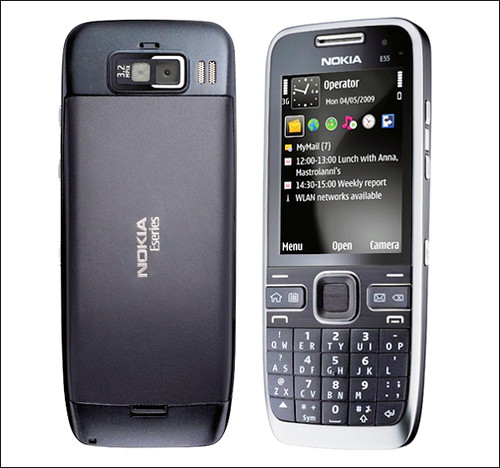
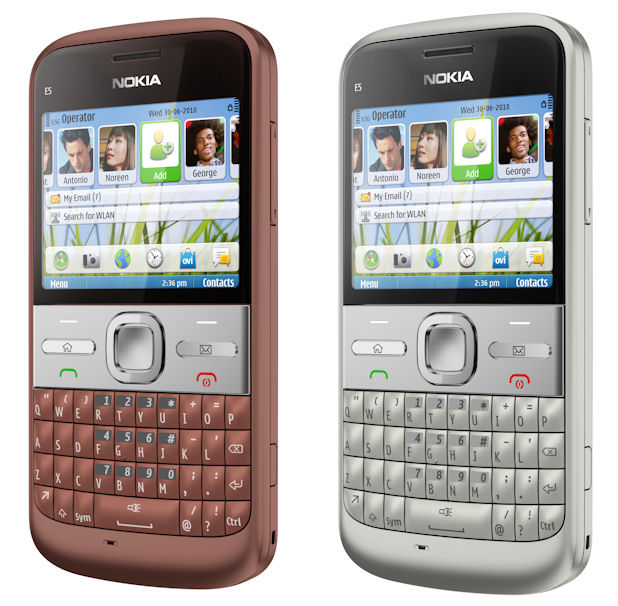
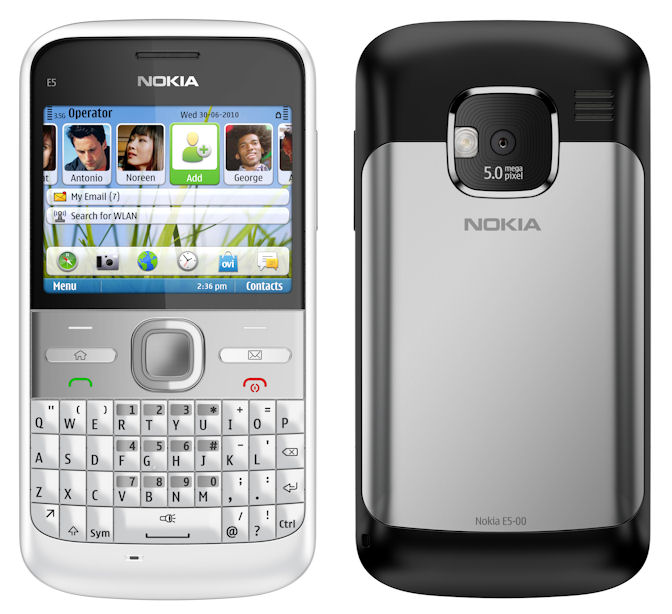
nokia e55 photos reviews
The new E – series mobile Nokia E55 is one of the thinnest mobiles ever produced by any of the mobile companies so far. The mobile is of the compact QWERTY type. This series of mobile phone not only is slender and stylish in appearance but also has many feature functions provided in it.
The mobile has a QVGA 2.4 inches wide screen that can give a resolution of 320 x 240 pixels and can well display 16 millions of colors. The device being ultra thin in design weighs only 95 grams. The mobile has a compact QWERTY keyboard. A user of the phone can write any text with ease in the mobile.
This series of Nokia E55 comes with Bluetooth of the version 2.0, a camera of 3.2 MP equipped with the latest EDOF technology, and 4X digital zoom. The camera of the electronic gadget comes with white balance controls, color mode, light sensitivity, auto focus, LED flash and many other features.
The mobile has great connectivity features in HSDPA, HSUPA, WLAN, and Wifi. It also offers Quad band GSM network features. So, a user can always get connected with the rest of the world. This series is also good for ardent music lovers. The mobile has got advanced music features. It comes equipped with the facility of album art facet and FM radio with RDS features. The music player has wide stereo aspect and equalizer for better sound product.
The onboard memory of the device is of 60 MB, and it can well be expanded up to 16 GB by using micro SD card. The battery of the mobile can withstand 8 hours of talk time and for a whole 31 days on standby time. So, this series of Nokia E55 proves to be a boon for business persons.
 nokia e55
 nokia e55 image
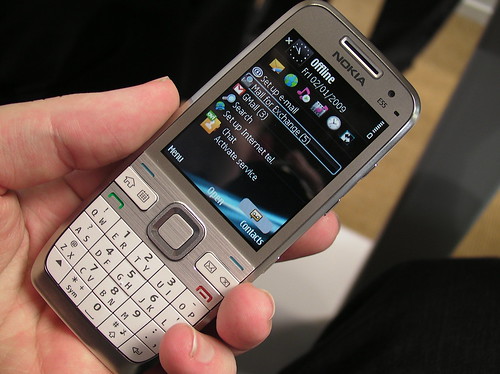 nokia e55 hand set
 nokia e55 image
 nokia e55 wallpaper
 nokia e55 pic
 nokia e55 photo



Short Audio News
Tech news of the last 24 hours in a short audio format. What's not to like ?
TNWDailyDose 24-02-2011 by TNW Daily Dose
TNWDailyDose 24-02-2011 by TNW Daily Dose
Wednesday, February 23, 2011
HTC Receives '2011 Device Manufacturer of The Year' Award by GSMA
The award follows a year of global momentum for HTC, which saw the launch of a wide range of smartphones such as the HTC Desire. HTC was awarded from a list of three finalists that included
“For HTC to be recognized by the industry in this way for the growth and success we have experienced in the last year is truly humbling,” said Peter Chou, CEO of HTC (News - Alert) Corporation, in a statement. “Thousands of people at HTC work tirelessly to create the intuitive and deeply personal smartphone experiences for which we have become known. This award is a measure of their passion and dedication.”
HTC previously was awarded for the “Best Mobile Phone (News - Alert) of 2010” with the HTC Hero. By putting people at the center of its innovation, HTC creates innovative smartphones that better serve the lives and needs of individuals.
“HTC has built its market presence from nowhere, with fresh branding and marketing and a strong portfolio of devices across many platforms,” said the GSMA (News - Alert) judges. “In particular, it has proven an exceptionally popular and enduring phone manufacturer. With great communication and good customer service, this is a well-deserved award.”
The GSMA awards were decided by a committee of judges. The committee included industry analysts and consultants, mobile operators, educators and other industry leaders.
Recently, HTC and Bell announced the launch of the Windows Phone 7-powered HTC HD7 smartphone. Available from Bell on Canada's best network, the HTC HD7 will keep clients connected and entertained "on-the-go" by pairing rich mobile multimedia features with a 4.3-inch display.
“For HTC to be recognized by the industry in this way for the growth and success we have experienced in the last year is truly humbling,” said Peter Chou, CEO of HTC (News - Alert) Corporation, in a statement. “Thousands of people at HTC work tirelessly to create the intuitive and deeply personal smartphone experiences for which we have become known. This award is a measure of their passion and dedication.”
HTC previously was awarded for the “Best Mobile Phone (News - Alert) of 2010” with the HTC Hero. By putting people at the center of its innovation, HTC creates innovative smartphones that better serve the lives and needs of individuals.
“HTC has built its market presence from nowhere, with fresh branding and marketing and a strong portfolio of devices across many platforms,” said the GSMA (News - Alert) judges. “In particular, it has proven an exceptionally popular and enduring phone manufacturer. With great communication and good customer service, this is a well-deserved award.”
The GSMA awards were decided by a committee of judges. The committee included industry analysts and consultants, mobile operators, educators and other industry leaders.
Recently, HTC and Bell announced the launch of the Windows Phone 7-powered HTC HD7 smartphone. Available from Bell on Canada's best network, the HTC HD7 will keep clients connected and entertained "on-the-go" by pairing rich mobile multimedia features with a 4.3-inch display.
HTC Mozart Review

Of these three, the Mozart is perhaps the most handsome. Today’s touchscreen phones tend to look quite slab-like simply due to the large size of their displays. However, the Mozart has beautifully rounded corners and curved edges. The dark grey metallic finish also looks the business and the three part approach to the rear of the phone, where the middle is made of metal with plastic cutaways at the top and bottom edges for the battery cover and camera surround, works really well.

In keeping with all the other Windows Phone handsets, there are three buttons at the bottom of the screen. The central Windows touch button acts as a Home key and this is flanked by Back and Search buttons. There’s also a lock button at the top of the phone, a volume rocker switch on the left and a camera button the right.
Like the Trophy, the Mozart has a 3.7in touchscreen with a resolution of 480 x 800 pixels, which is pretty much the standard for a handset in this price range. The screen uses standard LCD technology rather than OLED, but as with all Windows Phone 7 handsets it supports multi-touch. The screen is, on the whole, excellent as clarity is top-notch, viewing angles are good and colours are vibrant. However, black levels naturally aren’t as deep as you get on AMOLED displays and colours don’t look quite as rich.

HTC has used a speedy 1GHz Snapdragon QSD8250 processor and given the phone 576MB of RAM to strut its stuff with. The result is a handset that feels lightning quick to use and even offers up good graphics in 3D games like Glyder and Need For Speed Undercover. Naturally, it has the full armoury at its disposal when it comes to connectivity, with Wi-Fi and Bluetooth sitting alongside support for HSDPA at speeds of up to 7.2Mbps. The hefty processor and large screen do take their toll on battery life, however. For heavy usage, you’ll need to recharge it every day, but those who don’t make so much use of 3G web browsing or the GPS chip will get around two days from it.
Summer release for HTC Facebook phones.

Expect a June 17 release of the social networking mobiles which feature branded Facebook keys on the front. The special key provides instant access to Facebook notifications, updates, comments and feeds. It is also context sensitive, so a quick press following a photo will send the image straight to Facebook.
HTC had previously said that the phones would be available around Q2 2011, so Summer then..
The company has also pointed out that despite the handsets immediately being nicknamed ‘Facebook phones’, they are not Facebook branded. The social network simply worked together with HTC to produce them.
Both handsets feature Android 2.3, with the ChaCha including a full QWERTY keyboard for rapid fire social networking.
Three to release Gingerbread update for HTC Desire.
 Date specifics are yet to be confirmed but expect Android 2.3 goodness on your Desire eventually.
The network was asked if 2.3 was headed to the Desire and replied with: “Yes we will but we don’t have timescales yet.”
Getting the latest version of Android can make a huge difference to the speed and functionality of your phone. Expect portable Wi-Fi and remote wipe with Gingerbread, depending on whether or not Three change anything.
Mobile hotspot functionality will prove particularly useful especially given Three’s all you can eat policy on data.
Unlike with iOS, networks have to agree to the upgrade which mean the same phones on different networks get updated earlier than others.
Statistically you are most likely to get upgraded if you own a HTC phone, with Motorola and Samsung taking second and third. The Desire is looking a bit long in the tooth now, especially given all the dual-core announcements at this years MWC. Perhaps Gingerbread can give the put the desire back in the Desire.
HTC 7 Pro may be coming to Sprint this week as the Arrive

THe HTC 7 Pro has a 3.6 inch 480×800 display with a large side slide QWERTY keyboard. It has all the typical WP7 specs, including a 1 GHz processor, 5 megapixel camera, internal storage (8 GB in Europe), WiFi, Bluetooth, GPS, etc. There is nothing really special about it, except for the large keyboard and the fact that it will be a CDMA variant on Sprint :)
I am interested in seeing if it launches with Sprint Navigation and other Sprint services or special apps too. Any readers looking to pick up this Sprint WP7 device?
T-mobiles Side Kick LX
Following is the latest side kick lx which is better then all the version cux of its style and new specs which have completed all the bugs !

Specifications
Form factor
The Sidekick LX 2009 is a slider mobile phone that measures 5.2 x 2.4 x 0.6 inches and weighs 5.8 ounces and is powered by a 1250 mAh Lithium ion battery that provides up to 5.5 hours of talk time and up to 8 days of standby time. The mobile phone also supports a 65 K colors (TFT) 854 x 480 pixel resolutions display, an internal antenna, a QWERTY keypad and trackball. The Sidekick LX 2009 also supports an internal memory with expandability via a microSD / TransFlash card slot.
Network
The Sidekick LX 2009 utilizes the 850 MHz; 900 MHz; 1800 MHz and 1900 MHz network bandwidth.
Messaging, Communication and Connectivity
The phone supports functions such as Instant messaging via Yahoo!®, Windows Live®, AIM® and Text messaging. The phone is a 3G capable phone and supports Email protocols as well. The Sidekick LX 2009 supports connectivity via Bluetooth 2.0 (A2DP / AVRC / DUN / HFP / HSP / OPP), which allows users to synchronise the phone with compatible Bluetooth devices such as headsets, laptops or desktops; HSDPA high speed data transfer, GPS with Live Search that provides users with turn-by-turn direction to their destinations and PC Sync via USB 1.1 for upload and download as well as capabilities to update their phone’s status, phonebook and files.
Camera
The T-Mobile Sidekick LX 2009 has a 3.2 megapixel camera with video capture capabilities, and playback for video and music.
Other features
The phone also features an MP3 that supports MP3 / AAC file format, speakerphone, 854 x 480 pixel wallpapers and screensavers, MP3 ringtones, Themes and J2ME games. The phone also supports a 2000 entry phonebook, calendar, to-do list, allows WAP 2.0 HTML browsing, and has Voice Commands and a Calculator.


Subscribe to:
Comments (Atom)